Guest Wi-Fi and operational networks in hotels: why they are not the same thing
By Zentrum Middle East · 29 August 2026 · 8 min read
For hotel owners, operators and consultants
Guest connectivity and hotel operations should be planned as separate logical networks on one well-built physical infrastructure. They differ in traffic behaviour, security expectations, ownership and what happens when they fail.
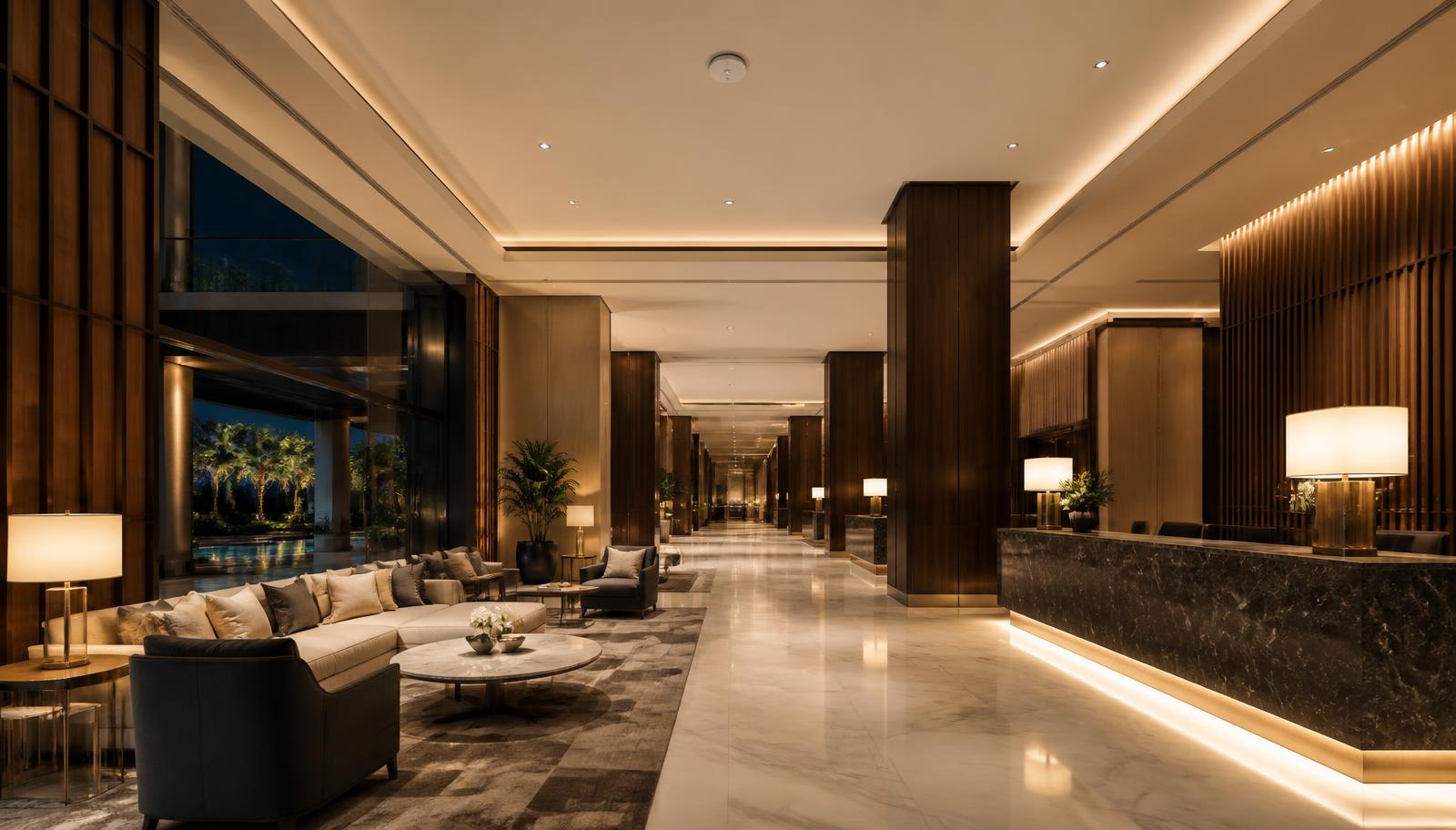
One building, several different networks
A hotel carries at least three distinct connectivity workloads. Guests expect consumer-grade convenience at high density and unpredictable times. Operational systems expect stability and predictable behaviour, often for years without change. Staff sit somewhere between the two, moving through the building with devices that need to stay connected.
They are frequently planned as one network because they share cable, switches and access points. Sharing the physical layer is correct and economical. Sharing the logical network is where problems begin.
Guest network characteristics
- High device count per room and per person, with concentrated peaks in lobbies, ballrooms and pool areas.
- Video streaming dominates, so capacity per area matters more than raw coverage.
- Devices are unmanaged and arrive with unknown configurations.
- Guests move constantly, so roaming behaviour between access points is part of the experience.
- The service is judged instantly and reviewed publicly.
Operational and back-of-house characteristics
- Fewer devices, but the consequences of an outage reach the whole operation.
- Fixed, well-known devices that should not be reachable from the guest network.
- Traffic is modest and predictable; reliability and separation matter more than throughput.
- Service areas, plant rooms, kitchens, loading bays and back corridors are frequently under-served because Wi-Fi design focused on guest areas.
- Staff mobility across all of those spaces is often discovered late.
Segmentation as a planning concept
Segmentation means treating those workloads as separate networks that happen to share infrastructure: distinct network segments, controlled routes between them, and guest traffic that has no path into operational systems. It is a design decision taken early, because it affects switch selection, addressing, access point configuration and how cabling is terminated — not something applied afterwards.
The practical question to ask during design is simple: if a guest device behaves badly, which other systems can it reach? The answer should be none.
The wired layer underneath
Wireless performance in a hotel is mostly a wiring outcome. Each access point needs a cable back to a suitably located floor distribution point; those points need a backbone to the main equipment room; and the whole path needs enough capacity that the wireless edge is never the only bottleneck. Corridor-mounted and in-room access point strategies both work, but they imply very different cable counts, and that choice belongs in early design, not on site.
Capacity, roaming and resilience
Capacity planning starts from occupancy and use, not floor area: a ballroom at full capacity is a different problem to the same square metres of corridor. Roaming needs consistent configuration across the property so a guest walking from room to lift lobby to pool does not drop. Resilience considerations — dual paths for the backbone, spare switch capacity, and equipment rooms with proper power and cooling — should be discussed openly with the owner so the level of investment is a decision rather than an assumption.
Common mistakes
Common mistakes
- Designing Wi-Fi for coverage maps rather than occupancy and behaviour.
- Placing operational systems on the same flat network as guests.
- Ignoring back-of-house until commissioning.
- Under-provisioning the wired backbone because the visible product is wireless.
- No agreement on who operates and monitors the network after opening.
Decide these before installation
The segmentation model; the access point strategy and resulting cable counts; equipment room and floor distribution locations; capacity assumptions per space type; resilience expectations; and the operational handover — who runs it, with what documentation, once the property is live.
Related systems
Zentrum plans and delivers network and connectivity infrastructure for hospitality projects across the UAE.
System view · conceptual
One backbone, separated services
- 01 /
External connectivity
Carrier entry, demarcation and the space reserved for it while the building is still on paper.
- 02 /
Main equipment environment
Core switching and main distribution, with power, cooling and access planned around maintainability.
- Core switching
- Power
- Cooling
- 03 /
Fibre backbone
Riser and inter-building fibre with counts and grades sized for a later refresh, not only for day one.
- 04 /
Distribution
Floor or zone cabinets holding patching, PoE switching and the labelling that keeps the plant legible.
- Patch fields
- PoE switching
- 05 /
Network services
Segmentation, addressing and capacity separating guest, staff, building-system and management traffic.
- Segments
- Capacity
- Management
- 06 /
Endpoints
Access points, workstations, cameras, readers, displays and control devices sharing one plant.
- Wi-Fi
- Security
- AV
- Controls
Outcome /
One backbone every other system can depend on.
Documented, labelled and tested, so future work extends the infrastructure instead of duplicating it.

From perspective to project
Working on something where this matters? Tell us the project stage and we will tell you what needs deciding next.
Discuss a project