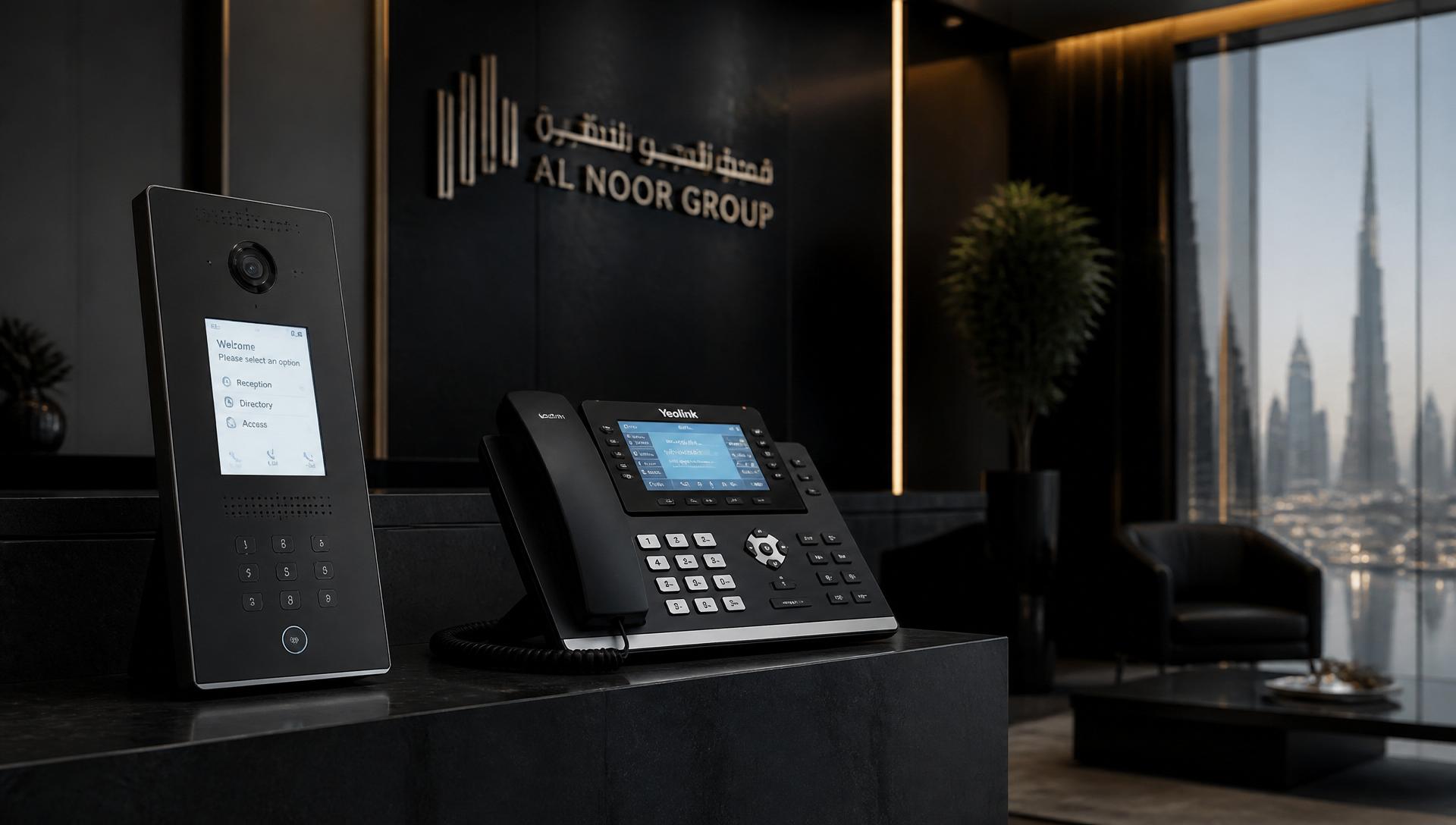
01 / Discipline · Connected Communication
Voice, video, presence — one fabric.
Connected communication systems for buildings, workplaces and residential environments
Voice, video, presence — one fabric, not four.
ConnectionRoutingEndpointsClarity
02 / The discipline
Connected communication is the fabric that carries voice, video and presence across a building — telephony, intercom, public address and in-building coverage designed as one system rather than four.
In residences it means an intercom that works, a video door station that shows who is at the gate, and calls that go where they should. In commercial environments it means a telephony fabric that scales with the tenants and integrates with the way the business already communicates.
Zentrum plans the communication layer with the architect and the wider project team so endpoints, interfaces and cabling belong to the building.
03 / Systems
What sits inside this discipline.
- 01E-PBX SystemsIP telephony for enterprises, hotels and multi-tenant towers — one call fabric, many use cases.
- 02Building Intercom & PAVideo intercom at the gate, audio intercom at the door, PA across every floor — one integrated fabric.
- 03Mobile Network EnhancersIn-building cellular coverage — DAS, small cells and repeater systems for towers, basements and villas.
- 04Private Inter-State / Country TelephonyPrivate voice fabric linking your UAE offices with sister sites regionally and internationally.
04 / Topology
One communication picture across the property.
Endpoint locations — telephones, intercoms, PA speakers, video door stations — sit at the intersection of technology, interior design and building operations. Positions, mounting, containment and interfaces are planned with the architect and MEP consultant so the communication layer belongs to the building.
- 01 /
External communication
Inbound and outbound calling delivered over the building's connectivity, arranged with the client's provider.
- 02 /
Internal communication
Extension-to-extension calling, door communication and announcements inside the property.
- 03 /
Routing and control
Call routing, groups, permissions and out-of-hours behaviour written against how the organisation works.
- Routing
- Groups
- Permissions
- 04 /
Systems
Telephony, intercom and public address planned together rather than bought as three separate products.
- Telephony
- Intercom
- Public address
- 05 /
Endpoints
Desk phones, softphones, door stations, handsets and speakers positioned where they are actually used.
- 06 /
Coverage
Reception across basements, cores, lifts and back-of-house so a call does not depend on where you stand.
Outcome /
One communication picture, not four.
Design and configuration only. Zentrum does not operate a network and makes no carrier claims.
05 / Where it matters
Being reachable, everywhere on the property.
- One fabric, not four
- Telephony, intercom, PA and coverage designed together rather than bought separately.
- Reliability
- A communication layer that behaves in the moments that matter most.
- Scalability
- Systems sized for the tenants, users and endpoints the building will actually have.
- Manageability
- Administration and reporting that fit how the operating team already works.
- Coordination
- Endpoints and interfaces placed with the architect and interior team, not retrofitted.
In a residence
In a residence, communication should feel calm and considered — a door station that works, an intercom that carries, calls that go where they belong.
ExploreIn a workplace
In a corporate environment, communication should support the business — telephony that scales, intercom that integrates, and coverage that behaves throughout the building.
ExploreIn a hotel or resort
Front desk, housekeeping, engineering and security all depend on being reachable — in the basement, in a lift lobby and on a pool deck.
ExploreTypical environments: Residential towers and villas · Corporate offices · Hospitality · Mixed-use developments · Multi-site organisations.
06 / Coordination
Who we coordinate with, and on what.
- Data & IT Infrastructure
- IP telephony and intercom ride the network and cabling plant.
- Seamless Wi-Fi Networking
- Wireless calling and mobile clients depend on the wireless network below them.
- Electronic Security
- Video intercom and access relationships extend the security envelope at entrances.
- Audio Visual Systems
- Meeting-room and video-conferencing systems overlap with the communication fabric.
07 / Delivery and continuity
How a communication package runs.
- 01 /Understand how the building and its people are meant to communicate.
- 02 /Plan telephony, intercom, PA and coverage as a single fabric.
- 03 /Coordinate endpoints and interfaces with the architect and interior team.
- 04 /Install, configure, integrate and hand over with the operating team.
Telephony, intercom and public-address systems need periodic verification as directories and layouts change.
Next step /
Talk to us about communication.
Zentrum designs, installs and configures communication systems. We are not a telecommunications operator and make no carrier claims.